Startseite

Forum

Ratgeber

Gruppen

Nützliche Adressen

Gemeinschaft

Rezepte

Kolumne

paralles54
09:55 paralles54 hat ein Thema kommentiert Rusalka auf Männerfang:  This comment really nails my thoughts on some longer performances! I've definitely had similar experiences where the content is great, but the runtime just becomes a bit much. It's like playing Infinite Craft for hours – fun, but you sometimes need a break before diving back in.
athiasa
03:21 athiasa hat ein Thema kommentiert Mag der Hund jetzt spielen?:  Aww, that's such a classic! The anticipation in that simple question is almost palpable. It reminds me of the excitement when you're about to dive into something fun and engaging. Speaking of which, have you ever tried to manage that same anticipation while playing Eggy Car? It's surprisingly addictive!
falcome
15.09.2026 12:20:51 falcome hat ein Thema kommentiert Mag der Hund jetzt spielen?: Danke für die coolen Casino-Apps, aber ich spiele lieber auf bewährten Seiten, da man dort mehr Möglichkeiten findet und es für mich bequemer ist. Zum Beispiel spiele ich oft dundee slots casino auf dieser Seite https://dundeeslots-osterreich.com/ und habe bereits erste große Gewinne erzielt.
knocs632
14.09.2026 14:52:54 knocs632 hat ein Thema kommentiert Lernen bei einer Ausstellung:   NURS FPX 4025 Assessment 2: Using Problem Analysis to Improve Nursing Practice Healthcare professionals encounter complex problems that can affect patient safety, staff performance, care quality, and organizational outcomes. Identifying a problem is only the first step toward improvement. Nurses must also understand why the problem occurs, determine which factors contribute to it, and identify practical strategies for addressing its causes. NURS FPX 4025 Assessment 2 provides an opportunity to examine how structured Problem Analysis can support evidence-based nursing practice and lead to meaningful improvements in healthcare. Recognizing Problems Within Clinical Practice The first stage of problem analysis is recognizing that a problem exists. Clinical problems may appear as medication errors, communication failures NURS FPX 4025 Assessment 1, delays in treatment, inadequate documentation, patient falls, infection risks, or gaps in patient education. Nurses are often among the first professionals to notice recurring problems because they work closely with patients and participate in daily care activities. However, observations should be supported by relevant evidence whenever possible. Clearly defining the problem prevents healthcare teams from addressing symptoms without understanding the larger issue. Defining the Core Issue A well-defined problem statement provides direction for further analysis. Instead of describing a concern in broad terms, nurses can identify what is happening, who is affected, where it occurs, and why it matters. For example, saying that "patient care needs improvement" is too general to guide an effective intervention. A more focused description might identify a specific communication gap or recurring delay in a particular care process. A clear problem statement helps the healthcare team establish priorities and determine what evidence is needed. Gathering Meaningful Evidence Problem analysis should be based on reliable information rather than assumptions. Nurses can collect data from patient records, incident reports, staff observations, surveys, interviews, quality indicators, and other appropriate sources. Quantitative information can demonstrate how frequently a problem occurs, while qualitative information can provide insight into staff and patient experiences. The combination of different types of evidence can provide a more complete understanding of the issue. Nurses should ensure that collected information is relevant to the identified problem and handled according to organizational policies. Exploring Root Causes One of the most important elements of Problem Analysis is identifying the underlying causes of an issue. A visible problem may have several contributing factors. For example, repeated documentation errors could be associated with unclear procedures, insufficient training, workload pressures, interruptions, or limitations within an electronic documentation system. Tools such as cause-and-effect diagrams, process mapping, and the "five whys" approach can help healthcare teams explore potential causes systematically. Finding root causes allows nurses to develop interventions that address the source of the problem rather than repeatedly treating its consequences. Examining Contributing Factors Healthcare problems rarely have a single cause. Individual behavior, team communication, organizational policies, technology, workload, staffing, environmental conditions, and available resources may all contribute. A thorough analysis considers these factors without automatically blaming individual employees. A systems-based perspective recognizes that healthcare outcomes are influenced by the environment in which professionals work. Understanding multiple contributing factors can lead to more sustainable solutions. Prioritizing the Most Important Concerns Healthcare organizations may face several problems simultaneously, but resources are often limited. Nurses and leaders therefore need to determine which issues require immediate attention. Priority can be influenced by factors such as patient-safety risk, frequency, severity, number of people affected, organizational impact, and feasibility of intervention. Prioritizing problems helps healthcare teams focus their efforts where they are most likely to produce meaningful improvements. Developing Evidence-Based Solutions After analyzing the causes, nurses can explore potential solutions supported by reliable evidence. Interventions should address the identified contributing factors and be realistic within the healthcare setting. Possible strategies may include staff education, revised procedures, improved communication systems, workflow changes, additional monitoring, or technology-based solutions. Stakeholder input is valuable during this stage. Nurses, patients, administrators, and other healthcare professionals may identify practical considerations that are not immediately apparent. Strengthening Team Communication Communication is frequently connected to clinical problems. Misunderstandings, incomplete handoffs, unclear responsibilities NURS FPX 4025 Assessment 2, and delayed information can affect patient care. Problem analysis can reveal communication gaps and help teams determine where improvements are needed. Standardized communication methods, structured handoffs, team meetings, and clear documentation can support better information exchange. Effective communication also encourages staff members to report concerns without fear of unnecessary blame. Implementing and Monitoring Change Identifying a solution is not enough. Healthcare organizations must implement changes carefully and monitor their effects. Nurses can help establish measurable goals and determine how progress will be evaluated. Appropriate indicators might include error rates, patient outcomes, compliance levels, response times, or patient feedback. Monitoring allows healthcare teams to determine whether an intervention is working. If results are not satisfactory, the strategy can be modified based on new evidence and observations. Encouraging a Culture of Continuous Improvement Problem analysis should be viewed as an ongoing process rather than a one-time activity. Healthcare environments change continuously, and new challenges can emerge as patient populations, technologies, policies, and workflows evolve. A culture of continuous improvement encourages nurses to identify concerns, examine evidence, test solutions, and evaluate outcomes. Leadership support is essential because staff need adequate time, resources, training, and communication to participate effectively. Connecting Problem Analysis With NURS FPX 4025 Assessment 2 NURS FPX 4025 Assessment 2 can help nursing students understand how structured analysis contributes to quality improvement and patient safety. Problem Analysis connects clinical observations with evidence-based decision-making. By defining problems clearly, collecting relevant evidence, identifying root causes, prioritizing risks, implementing solutions, and evaluating outcomes, nurses can contribute to meaningful improvements in healthcare delivery. This process also demonstrates the importance of collaboration. Complex healthcare problems often require input from multiple professionals rather than relying on one person's perspective. Conclusion Problem Analysis is an essential skill for nurses who want to improve healthcare quality and patient outcomes. A structured approach helps professionals move beyond identifying symptoms and investigate the underlying causes of clinical and organizational challenges. For NURS FPX 4025 Assessment 2 , understanding Problem Analysis demonstrates how nurses can use evidence, critical thinking, communication, and teamwork to address healthcare concerns. When problems are carefully analyzed and solutions are continuously evaluated, healthcare organizations can strengthen patient safety, improve efficiency, and create a stronger foundation for high-quality nursing practice.
 
derpington
05.11.2020 15:07:52 derpington hat einen Ratschlag gegeben Ratgeber: Spirale schon ausprobiert?!
derpington
05.11.2020 15:06:30 derpington hat einen Ratschlag gegeben Ratgeber: Gewissheit bekommst du nur beim Arzt.
malou
26.02.2015 17:17:09 malou hat einen Ratschlag gegeben Ratgeber: tut mir leid :/ such im internet nach einer selbsthilfegruppe vielleicht gibt es eine in deiner nähe oder ein internetforum. ansonsten kannst du deinen arzt danach fragen vielleicht hat er eine lösung für dich.
malou
26.02.2015 17:12:26 malou hat einen Ratschlag gegeben Ratgeber: nicht jeder bekommt sie oder alle 4... ich hatte drei wurden jedoch alle entfernt. du kannst deinen zahnarzt oder kieferorthopäden fragen und ggf eine zweitmeinung einholen. wenn sie weh tun würde ich sie schon entfernen lassen viel glück
 
News Update
Für alle, die gerne unterwegs sind!
Musiker
Für alle die Musik in all ihren Facetten lieben
Serienjunkies
Für Leute die süchtig nach Fernsehserien sind
Ich möchte alles erleben
Für alle, denen das nicht reicht, was sie bereits kennen und wissen. Für die, die gerne ausgefallene Sportarten machen oder sich gerne in verschiedene Richtungen weiterbilden wollen. Und natürlich auch für die, die sich hier ein paar dementsprechende Ideen einholen oder Erfahrungen austauschen möch
 
 
27.03.2012  |  Kommentare: 0

Man muss Mut haben, zu fantasieren

Man muss Mut haben, zu fantasieren
Kinder erforschen Kunst spielerisch

Es riecht nach Frühling, die Sonne droht schon förmlich mit Sonnenbrand, die Luft wird dicker und die jungen Männer und Frauen schlürfen durch die Straßen von Graz - nun nur mehr mit kurzer Hose und T-Shirt. Am Donnerstag, dem 16. März, kam der Frühling nach Österreich. Trotz der Wonne, die da draußen hinter den kalten Wänden und künstlich beleuchteten Räumen, zieht es jeden Wissens- und Erlebnisgierigen in die Wissensstätten - in Museen.

Bereits zum zweiten Mal (die wahren Kunstreunde, die wissen, dass Kunst in nur größerem Maßstab messbar ist, werden sicherlich an dieser Stelle kräftig kichern) ging ich ins Kunsthaus. Da ich mit zwei Kindern, meinem einjährigen Sohn und der sechsjährigen Clara, unterwegs war, richtete ich mich nach ihren Wünschen. Mein Wunsch ins Landeszeughaus zu gehen, lehnte Clara sehr schnell ab und bestand gleich darauf, ins Kunsthaus zu gehen. Obwohl ich zu ihr sagte, dass dort die Ausstellungen eher für Erwachsene als für Kinder wären, meinte sie, es mache nichts, sie liebe Kunst. Somit ließen wir drei - Clara, Jordan und ich - uns von der modernen Kunst überraschen.

Erfreut stellte ich fest, dass sich der Ihhalt in der aktuellen Ausstellung „The Urban Cultures of Global Prayers“ um einiges geändert hat. Was sich dann rasch in eine Enttäuschung umwandelte, denn die vorherigen Ausstellungsobjekte fand ich viel interessanter, wohl auch vor allem aus dem Grunde, dass es damals viel mehr Beschreibungen und Erklärungen dazu gab.

Auch bei den Ausstellungen von Sofie Thorsen „Schnitt A-A“ und Michael Kienzer „Logik und Eigensinn“ überließen die Künstler es dem Besucher, die Inhalte nach den eigenen Vorstellungen und aus den Kräften der eigenen Fantasie zu interpretieren. Es fehlte jegliche Art von Hinweis.

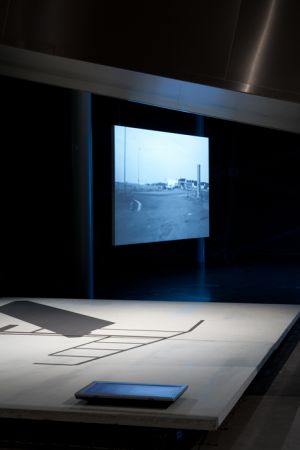
Im Endeffekt erwies sich moderne Kunst als nicht das Richtige für ein Kind. Außerdem hatte Clara nun folgendes im Kopf: die Rolltreppe, die eine Aufsicht der Ausstellung „The Urban Cultures of Global Prayers“ als  „Mur“ bezeichnete. Die Inhalte und Absichten der Präsentationen blieben uns bis aufs Weitere fremd. Eine weitere "Wache" konnte uns einige Einblicke in die Gedanken- und Wahrnehmungswelt von Sofie Thorsen gewähren. Nämlich, dass die im Raum ausgestellten Objekte von einem Leben als Sehbehinderter, in der man die Umwelt wie in einem alten Stummfilm wahrnimmt, erzählt. Der Besucher darf nur raten, dass das gedämpfte Licht im Raum und die schwarz-weiß-Fotos, Videos, einige Präsentationen des ins Raum hineinbrechenden Lichtes darauf ein Hinweis geben sollten. Als Ausgleich und Kontrastdarstellung – die bunten Stahlstangen, die den Raum wahllos durchstachen.


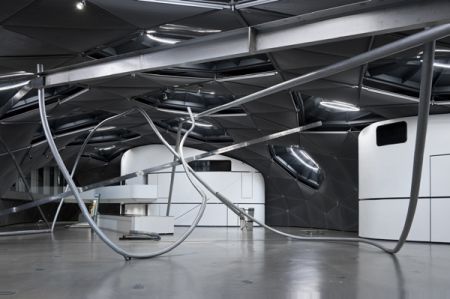
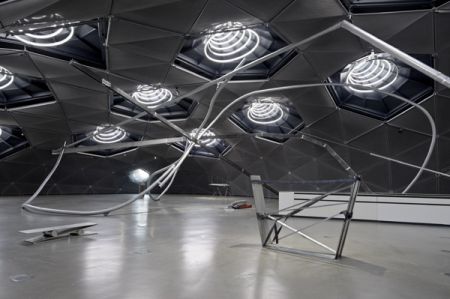
In einem Raum mit vielen Blättern aus Stahl, Rohren, ganzen Rollen aus Linoleum, Teppichen, Gummibändern, Farbverdünner, Radiergummis, etc indem diese gesamten Schätze zu einigen "Bündeln" zusammengesetzt wurden und jeweils ein Kunstwerk darstellten, ließen wir unserer Fantasie freien Lauf. Das Hauptthema des Projektes filterte sich für uns jedoch sehr klar heraus: Es ging um den Raum und die Räumlichkeit und wie man unterschiedliche Sachen verbindet. Das Wichtigste war, dass man im Endeffekt den Titel des Buches „Und kann man darauf auch sitzen?" (im Dumont Verlag erschienen) widerlegt.

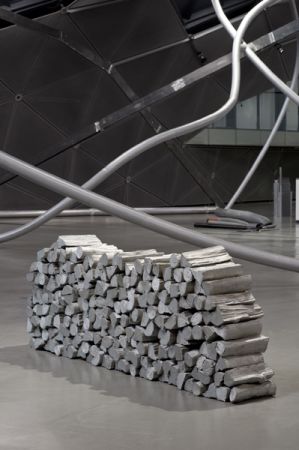
Wir sahen einen Haufen Brennholz, der in Silberfarbe ausgemacht wurde. Clara nannte ihn umgehend "Silberbarren". Weiter standen wir vor einer Skulptur, die an ein Balancespiel erinnerte. Es waren drei Bretter mit jeweils einem Eimer mit Farbverdünner. Zum Anhalten wurden diese durch Radiergummis gebracht. Ein wahrer Balanceakt aus Sachen aus dem alltäglichen Gebrauch. Als Letztes richtete sich unser Blick auf eine Röhre, die den gesamten Raum umwickelte. Diese erinnerte uns an eine Wasserrutsche und wir transportierten uns gedanklich ins Freibad. 


Als wir uns dann anschließend auf den Weg zum Mittagsessen machten, kündigte Clara stolz an, dass sie einen Aufsatz zusammenfassen werde, in dem sie ihre Impressionen wiedergibt.

Der Besuch der Ausstellungen von Sofie Thorsen „Schnitt A-A´“ und  Michael Kienzer „Logik und Eigensinn“ zeigten mir deutlich, wie eingeschränkt die eigene Fantasie ohne Vorwissen oder zusätzliche Information ist. Es ist wie im täglichen Leben: Wir sehen die Welt, nehmen Dinge jedoch nur beschränkt wahr, weil wir sie nicht interpretieren können, sondern wir immer erwarten, dass uns jemand alles vorkaut.

Die Kreationen von Sofie Thorsen und Michael Kienzer können bis zum 06. Mai im Kunsthaus bewundert werden.


Varvara Shcherbak

Fotos: UMJ/ N. Lackner


Kommentare

Facebook automatisch im meinem Facebook-Profil anzeigen
Twitter automatisch im meinem Twitter-Profil anzeigen 

die-frau.com
Gruppe der Rubrik Weiter nach alle
All around the world
Wenn für dich Reisen, Entdecken neuer Lände...
Anzahl Mitglieder: 10
Ich möchte alles erleben
Für alle, denen das nicht reicht, was sie b...
Anzahl Mitglieder: 8

Der Mann des Tages


Rezept der Woche

Zitronenmarmelade

Kolumne  
Marvel(lous)!

On Thursdays, we're Teddybear Doctors

Marvel(lous)!

Umfrage Weiter nach alle

Ich kaufe mir Kleidung...

Nützliche Adressen Verzeichnissuche